


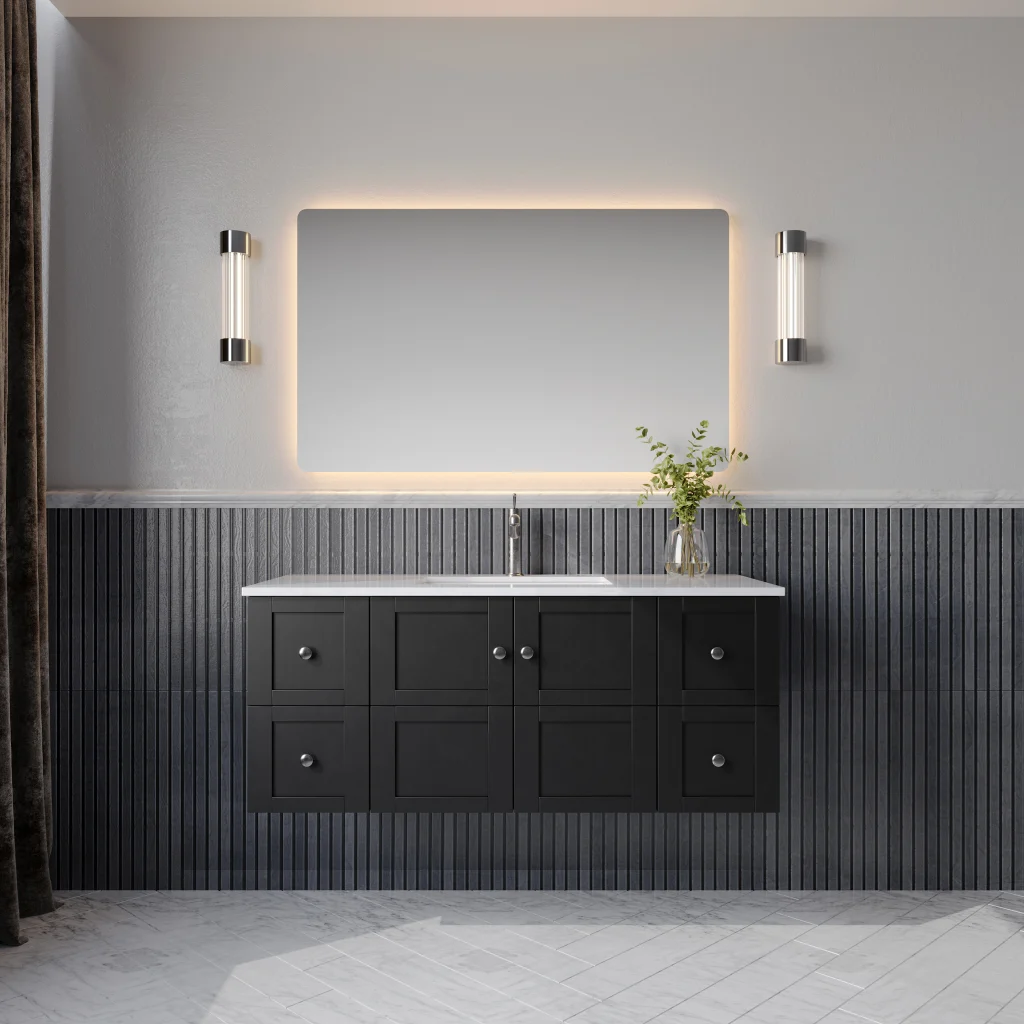
Bathrooms are one of the most used rooms in any home, but they are also one of the most overlooked when it comes to lighting. The right lighting can make a bathroom feel bigger, brighter, and more welcoming. It can also make daily routines, like shaving, applying makeup, or getting ready in the morning, much easier and more enjoyable.
With the holiday season or a bathroom renovation around the corner, it is the perfect time to plan a lighting scheme that works for your space. In this guide, we will cover everything you need to know about bathroom lighting.
Let’s get started!
Why Bathroom Lighting Matters
Bathrooms are very special rooms. You use them for quick tasks like brushing your teeth and shaving, but also for relaxing baths or getting ready for a big day. That means you need bathroom lighting ideas at different times.
If the lighting is wrong, you might have harsh shadows on your face, or the room might feel dull and unsafe. On the other hand, if you do it right, bathroom lighting can help you feel calm, relaxed, and ready to go.
Good lighting also boosts the way other things in your bathroom look. It makes your tiles, mirrors, and other bathroom products look better. And if you are designing a new bathroom, lighting helps highlight your bathroom vanity, your floor-standing vanities, or any modern design you choose.
Types Of Bathroom Lighting
Lighting experts often talk about three layers of lighting in any room. Bathrooms are no different. These three layers are:
- Ambient Lighting (general light)
- Task Lighting (for specific actions)
- Accent Lighting (to highlight features)
Ambient Lighting
Ambient lighting gives the room its base light. It is the light you use when you first walk into the bathroom. For ambient lighting, many homes use:
- Recessed ceiling lights
- Flush‑mount or semi‑flush ceiling fixtures
- LED panels or even “light wells” (especially in bathrooms without windows)
According to Lamps Expo, layered lighting using ambient fixtures helps you to create a balanced and flexible design.
When you plan ambient lighting, think about brightness. A common guide is to aim for about 400 lumens per square meter for general lighting.
Task Lighting
Task lighting is for the places where you do specific things. In a bathroom, that usually means:
- The mirror or vanity (for shaving, makeup, brushing teeth)
- The shower area (for better visibility)
Good task lighting reduces shadows. That is why many designers recommend putting lights on the sides of the mirror, not just above it.
Some common task fixtures are:
- Wall sconces (mounted beside the mirror)
- Vanity lights (bars above or below a mirror)
- Mirrors with built‑in lighting or backlit mirrors
Accent Lighting
Accent lighting adds style and draws attention to particular design features. In a bathroom, you might use accent lighting to highlight:
- A niche in the wall
- Tiling or a tile pattern
- A shelf or a piece of decor
Accent lights are often LED strip lights or small spotlights directed at specific features.
Accent lighting helps make your bathroom feel more than just utilitarian. It adds depth, drama, and personality. It should be added last so you can sculpt the look of the room.
Safety And Waterproof Ratings
Safety is very important in bathroom lighting because of moisture and water. You need to choose lights that are safe to use in damp areas.
Here are key safety rules:
- Use damp-rated lights for areas that are not directly in the shower or bathtub area
- Use wet-rated fixtures in places that will be exposed to water spray, such as inside the shower
- Check the IP rating of your light fixtures. For example, a common suggestion is IP44 for wall lights near the bath or shower
- For very close to water (e.g., floor of shower), stronger protection may be needed, such as IP65 or more
- Always consult a qualified electrician when installing bathroom lighting to make sure everything is safe
How Bright Should Bathroom Lighting Be?
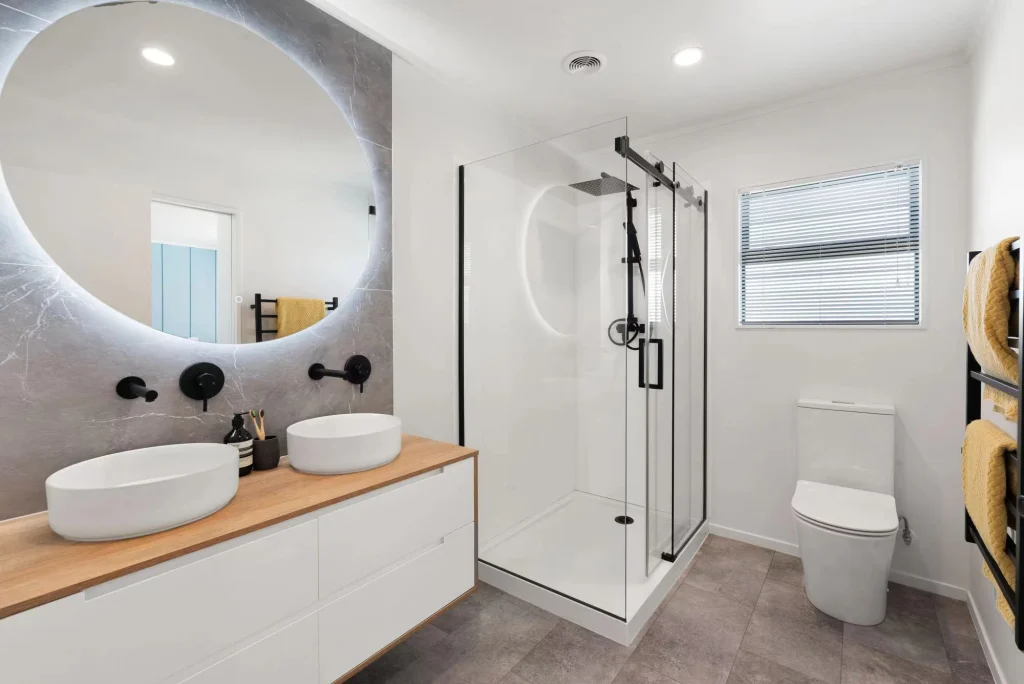
It is not just how many lights you have, but how bright they should be. Here are some practical numbers and guidelines:
- A small bathroom may need around 1,500 lumens total, while a larger master bathroom could need up to 4,000 lumens, depending on size and how many zones you have.
- For task lighting at vanity, aim for 700‑800 lumens per fixture (or more, depending on how bright you like it)
- For accent lights, you can use a lower level, around 300‑400 lumens, for a decorative effect
Another important measure is called CRI (Colour Rendering Index). CRI tells you how well a light shows the actual colour of things, compared to natural light. For bathrooms, especially near mirrors, a CRI of 90 or more is often recommended.
Colour Temperature: Warm, Neutral, or Cool?
The colour of light affects how a space feels and how things look. In lighting design, we talk about colour temperature, measured in Kelvin (K). Different temperatures are good for different uses.
- Warm White (about 2,700‑3,000 K): This creates a soft, cosy feel. Good for relaxing baths or ambient lighting.
- Neutral White (about 3,500‑4,000 K): This strikes a balance. It is bright enough for tasks but not too cold. Edward Martin recommends this for bathrooms to keep clarity and comfort.
- Cool White / Daylight (above 5,000 K): This is very crisp and bright. It is good for task lighting if you want to see everything clearly. But in a bathroom, too much cool white can make the room feel clinical.
Choosing The Right Fixtures
Depending on your bathroom layout and style, different lighting fixtures may work better. Here are some common types and how to use them:
Ceiling Fixtures
These are good for general ambient lighting:
- Recessed Lights: These sit flush in the ceiling and look clean. Use wet-rated ones near the shower.
- Flush Mount or Semi-Flush Mount Fixtures: These hang slightly from the ceiling and can add a decorative touch.
- For large bathrooms, you can go bold with pendants or even a chandelier.
Wall Lights And Sconces
These are especially useful around the mirror:
- Place wall sconces at eye level, one on each side of the mirror, to avoid shadows on your face.
- Use frosted or diffused shades so the light is soft and even.
- Swing‑arm sconces can be adjusted to direct light where you need it.
Mirrors With Built‑In Lighting
Mirrors with lights built in are very useful for task lighting. They make your reflection bright and clear without harsh shadows. These can be mirrors with a backlight or LED‑integrated mirrors.
LED Strips And Accent Lighting
Use LED strip lighting for a decorative effect:
- Under your bathroom vanity (or under floor standing vanities) to create a soft glow.
- Around nooks or shelves to highlight tiles or decor.
- Around or behind your led mirror or backlit mirror to give a floating effect.
Accent lights can make your bathroom feel like a calm spa.
Conclusion
Bathroom lighting is more than just putting in a good bulb. A smart lighting design uses ambient, task, and accent lighting to make your room functional, safe, and beautiful. You want the right brightness, safe fixtures, and a design that fits your space and how you use it.
If you are working on a bathroom renovation or design, let us help. At Danik Bathroom, we offer a wide range of bathroom lighting ideas and bathroom products that match any style. Contact us for advice or to browse lighting options for your new bathroom.
Frequently Asked Questions
The best colour temperature is usually around 3,500 K to 4,000 K. This is neutral white light. It feels bright for tasks like grooming, but it is not too cold. But you can mix warm and cool tones if you want different moods.
Yes. Because bathrooms are moist, lights must have proper ratings. Use damp‑rated fixtures for general areas and wet‑rated lights for places like inside a shower box. Check for IP ratings to ensure safety.
It depends on the size and how you light the zones. Generally, small bathrooms may need 1,500 lumens, while larger ones could need up to 4,000 lumens. For the mirror area (task lighting), you might aim for 700‑800 lumens per fixture.
Yes. An LED mirror or a mirror with a backlight is a very smart choice. It gives even light for grooming. It also adds a modern and clean look to your bathroom.
You can layer your lighting to make it both useful and stylish. Use ambient ceiling lights, bathroom accessories like LED strips under the bathroom vanity or floor-standing vanities, and add accent lights to highlight tiles or design features.
RELATED POSTS
LED Bathroom Mirrors Explained: Technology, Benefits & Buying Tips
Have you noticed how modern bathrooms appear brighter and more polished than they did before?... read more
How to Clean and Maintain Your Bathroom Tapware: A Complete Guide
Have you ever noticed how quickly bathroom taps lose their shine, even when the... read more
Frameless Shower vs Framed Shower — Which Should You Choose?
Many people struggle to choose the right shower for their bathroom. With so many options... read more
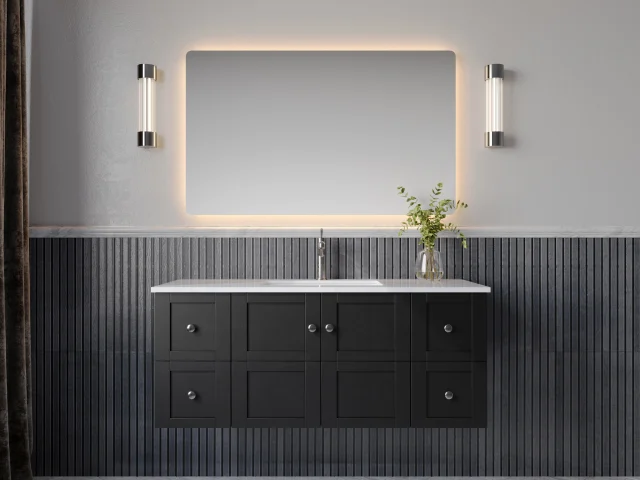
The Complete Guide to Bathroom Lighting
Bathrooms are one of the most used rooms in any home, but they are also... read more
How To Clean Your Shower Head: Simple Descaling Tricks For A Spotless Bathroom
We all know, with time and regular use, your shower head can get clogged with... read more
30 Walk-In Shower Ideas for Any Size Bathroom
Transforming your bathroom into a stylish, functional sanctuary is a goal for many New Zealand... read more
Designing a Timeless Space: Your Guide to Classic Bathroom Design
A timeless bathroom blends elegance, function, and durability, creating a space that feels fresh for... read more
Stunning Bathroom Trends for 2025
Bathrooms in New Zealand are evolving into stylish, functional, hi-tech havens, and 2025 brings trends... read more
